Building Better Relationships
Helping teams get to know each other better and build stronger relationships with their clients.
Client
Made Manifest
Design Team
Made Manifest
Project Type
Product Development and Design, prototype testing
The Challenge:
At Made Manifest, we begin every status meeting (as a team and with clients) with a warm-up question. This meeting ritual breaks the ice, helps team members get to know each other, encourages conversation among clients and team members, and helps build better working relationships. It also helps to ease some of the uncomfortable silence or small talk that often can occur while everyone is waiting for a virtual meeting to start.
Although there are many icebreaker cards and question sets available, many of the existing questions were often too personally revealing, not work-appropriate or too serious to work as a simple warm-up question. It felt like something was missing from our facilitator toolkit to help us quickly pick questions that felt psychologically safe enough to ask a group of strangers during a meeting. The team set out to design, test, and develop a set of validated icebreakers.
The Outcome:
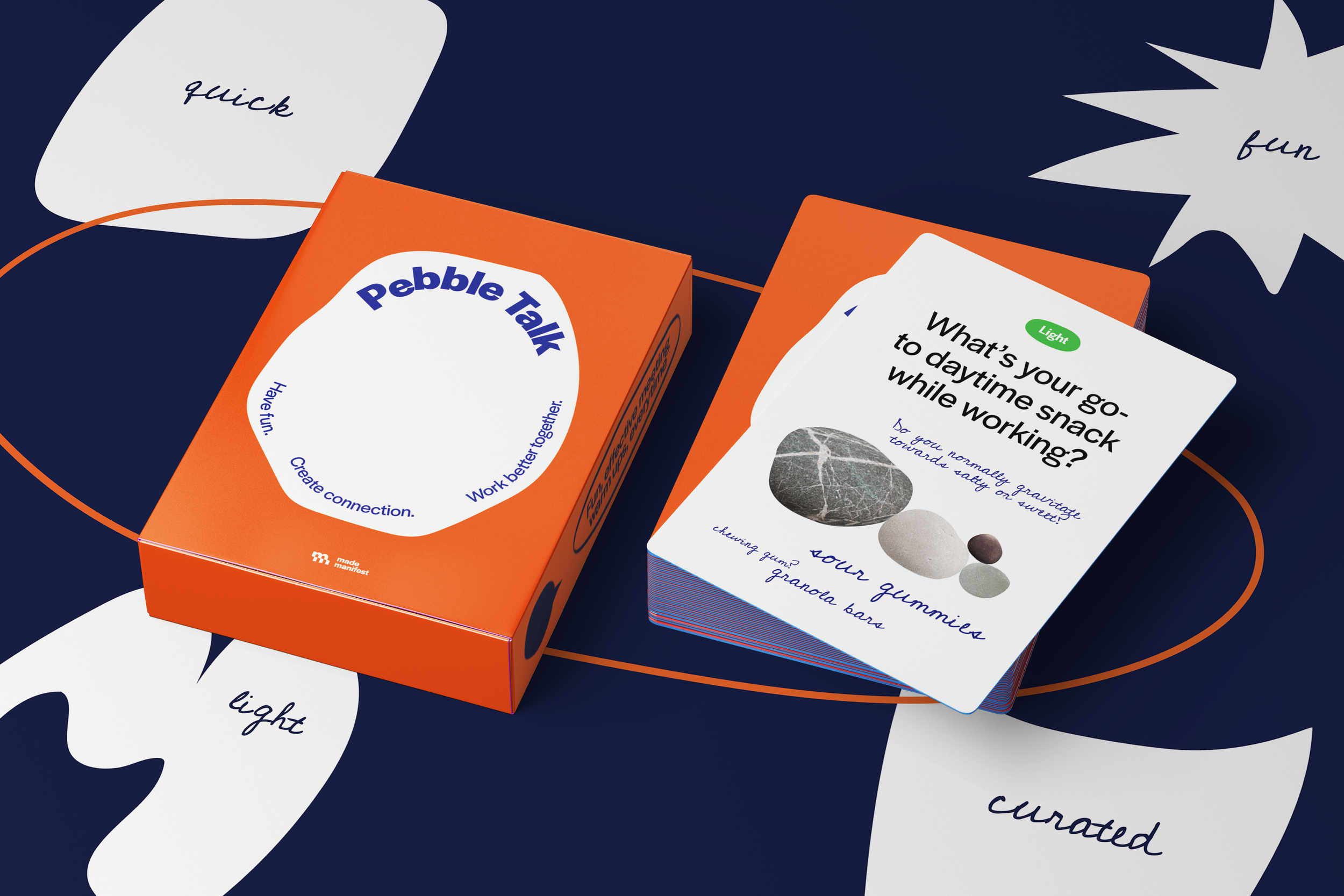
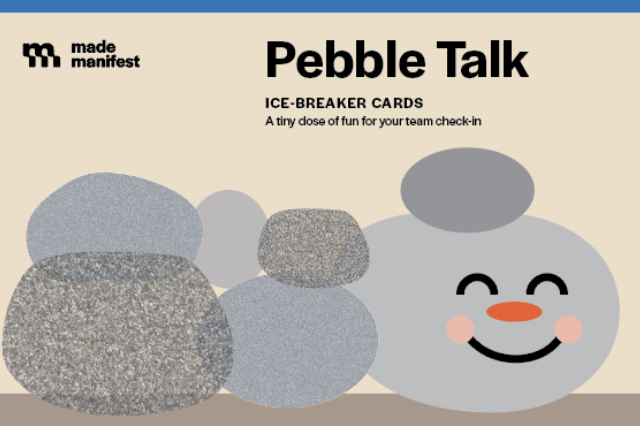
Pebble Talk was born of our desire to build better connections with our clients and colleagues and to crush painful small talk at the start of meetings. It is a curated facilitation deck of questions and prompts designed to build team connections. It brings more joy and fun to meetings while helping people run effective icebreakers. The deck is currently available for purchase online, with the first run of cards quickly selling out.
The Approach:
Over the course of six months in 2024, the Made Manifest team worked part-time on the design of icebreaker cards, utilizing the very human-centred design process the team uses with its clients— from ideation to product development, each step in the design process was validated and tested by users.
Project Methodology
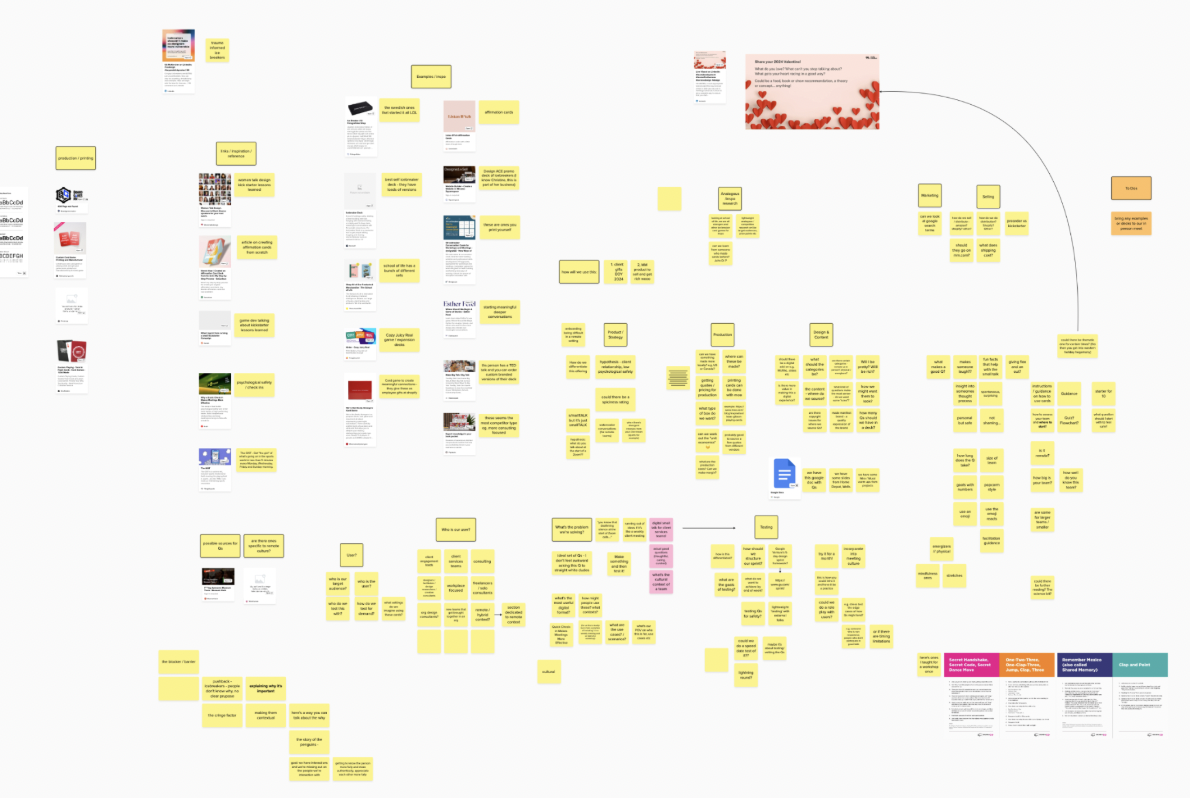
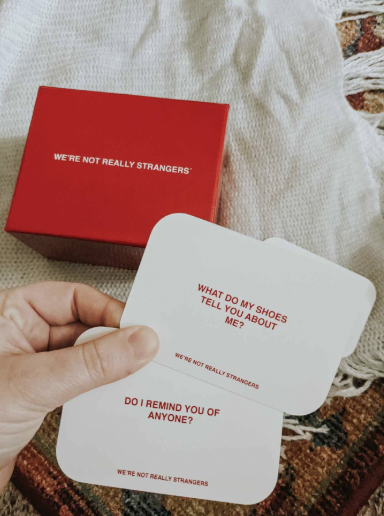
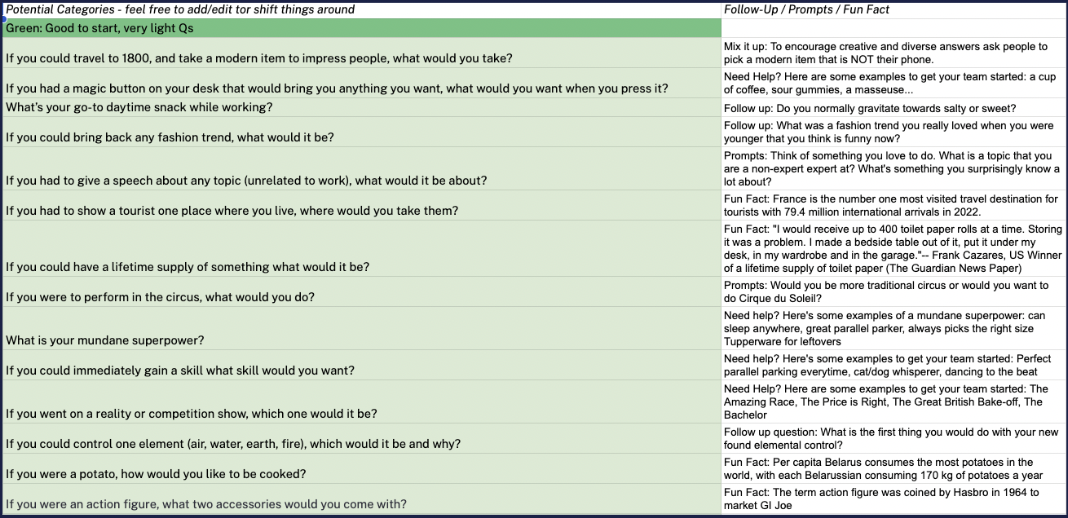
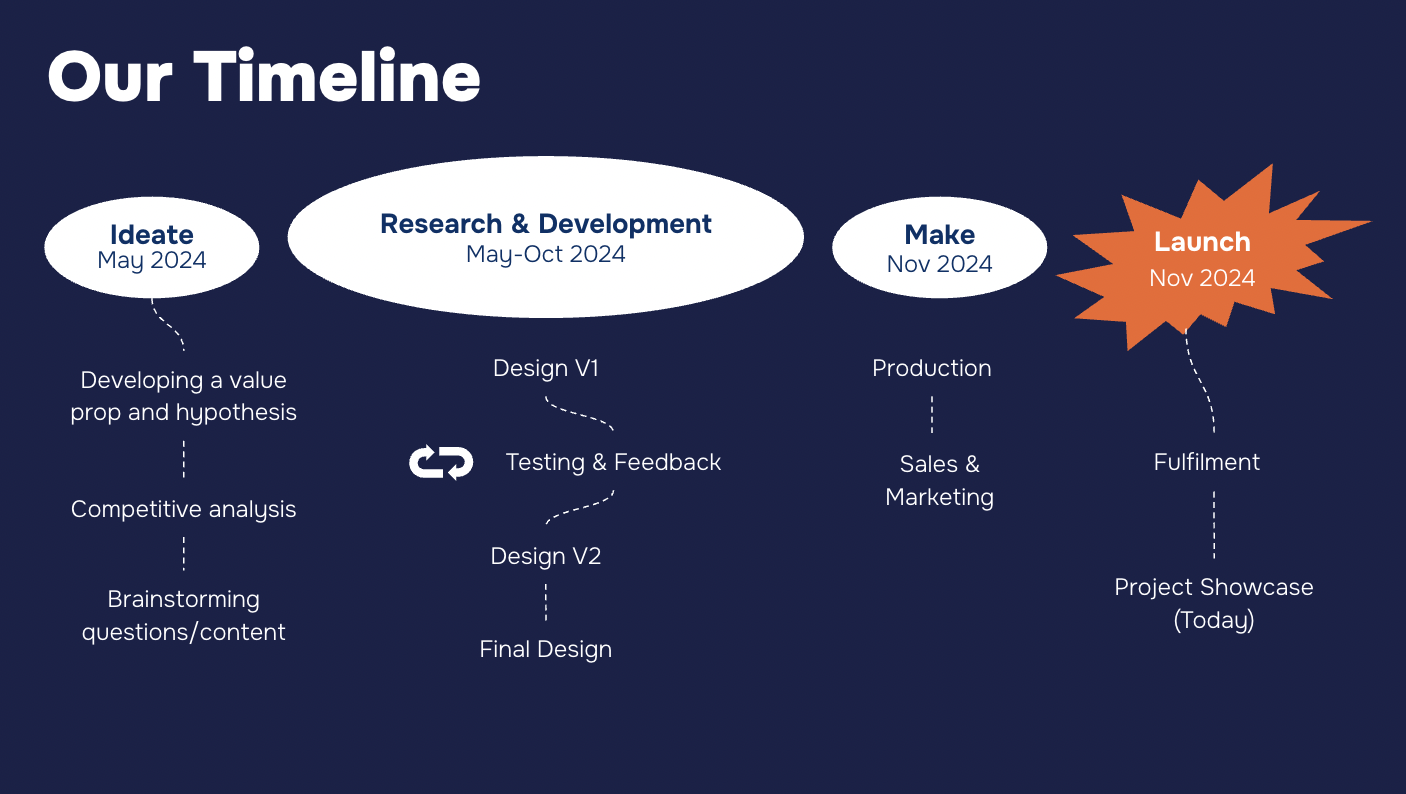
The process of developing Pebble Talk began in May 2024, with the team establishing the value proposition, exploring hypotheses on user needs and use cases, and completing a competitive analysis. This initial phase of the project mainly focused on developing questions and content for the deck; questions were brainstormed, compiled into a spreadsheet and refined. The questions were then sorted by question type: easy to answer, lightning round, deep dives, and physical warm-ups.
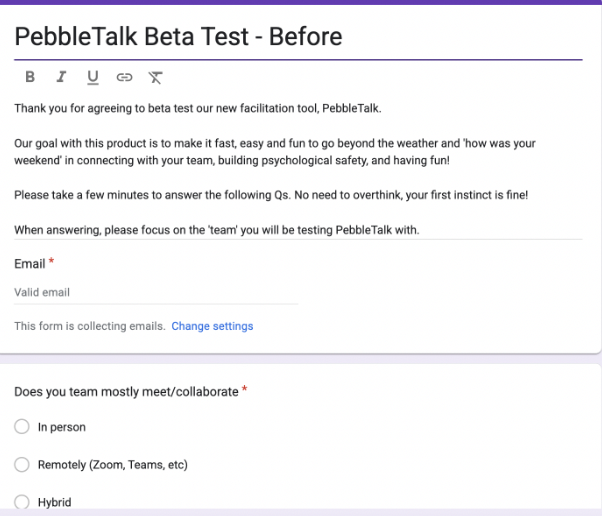
In phase two, the team designed a rough prototype of cards which could be used in user testing with 5 participants. The user test was over the course of one month, and the participants were asked to use the cards a minimum of four seperate time during their meetings. Before the test began, participants filled out a brief survey to collect contextual information about their work, the size of their team, and their collaboration style. When the testing period was over, participants were all interviewed to gather their feedback on the deck and their experience using them with their colleagues and clients.
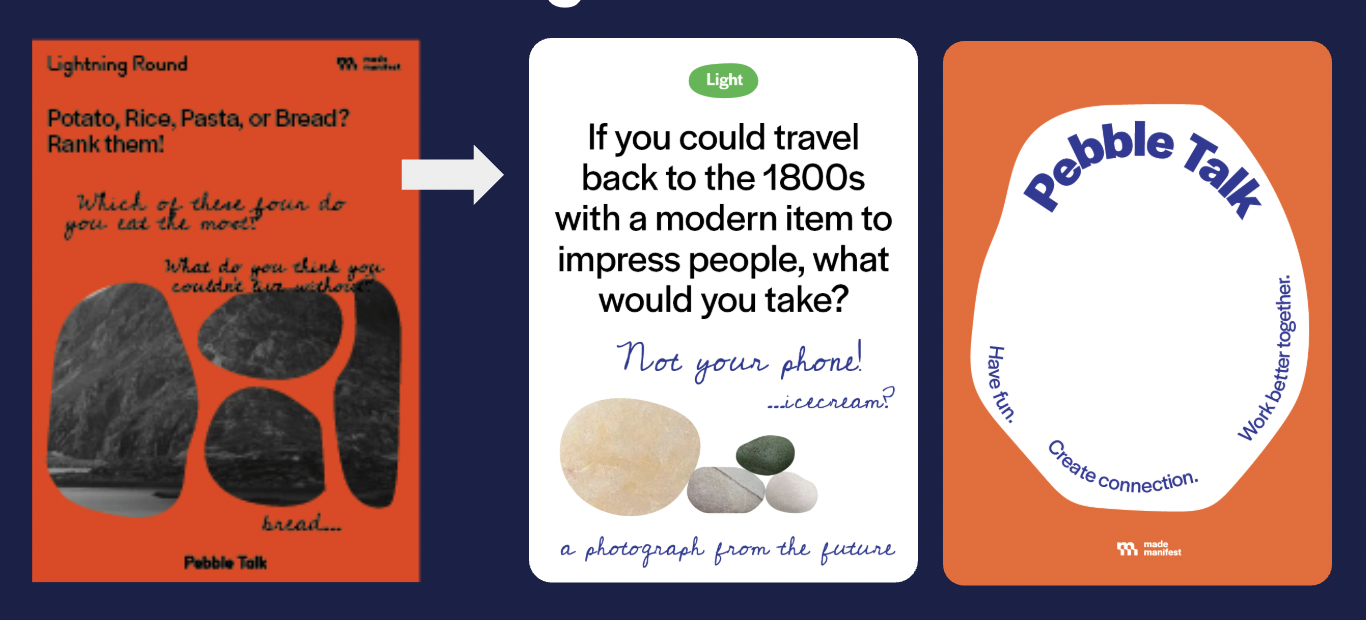
Some of the learnings we gathered from the prototype testing included:
Validating our value proposition as people saw real value in using the cards— finding them at the right balance of fun and work-appropriate
Many people used the cards in scenarios beyond what we initially thought, for example, as conversation starters over Slack for a remote team or even to break the ice during job interviews
Participants saw more value in having a physical card deck over a digital version
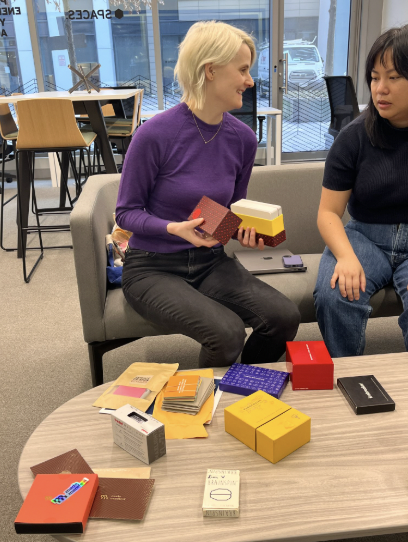
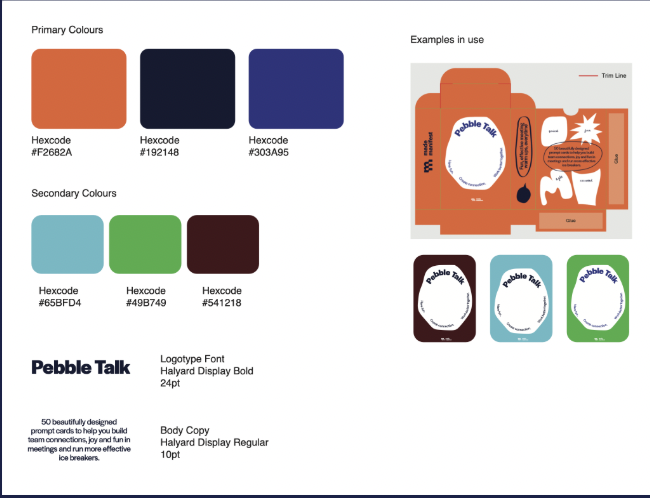
The insights gathered from the prototype testing allowed for more iteration of the questions, instructions and design of the deck. In parallel to this, the team worked on re-designing the branding for the cards and packaging— the new design aimed to be playful but more elevated in its design, incorporating rock motifs and more colour. Once this iterative design phase was completed, the cards went into production.
Pebble Talk in the World
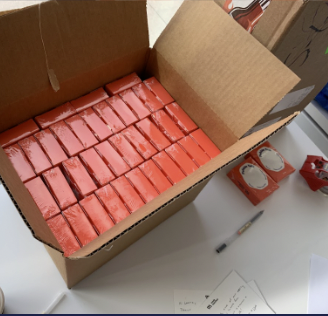
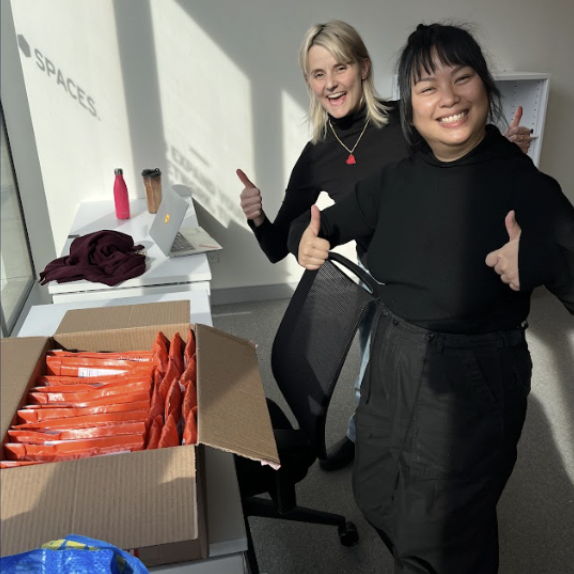
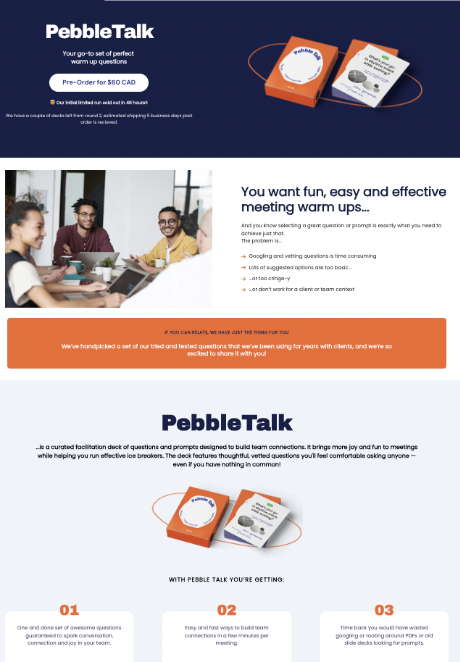
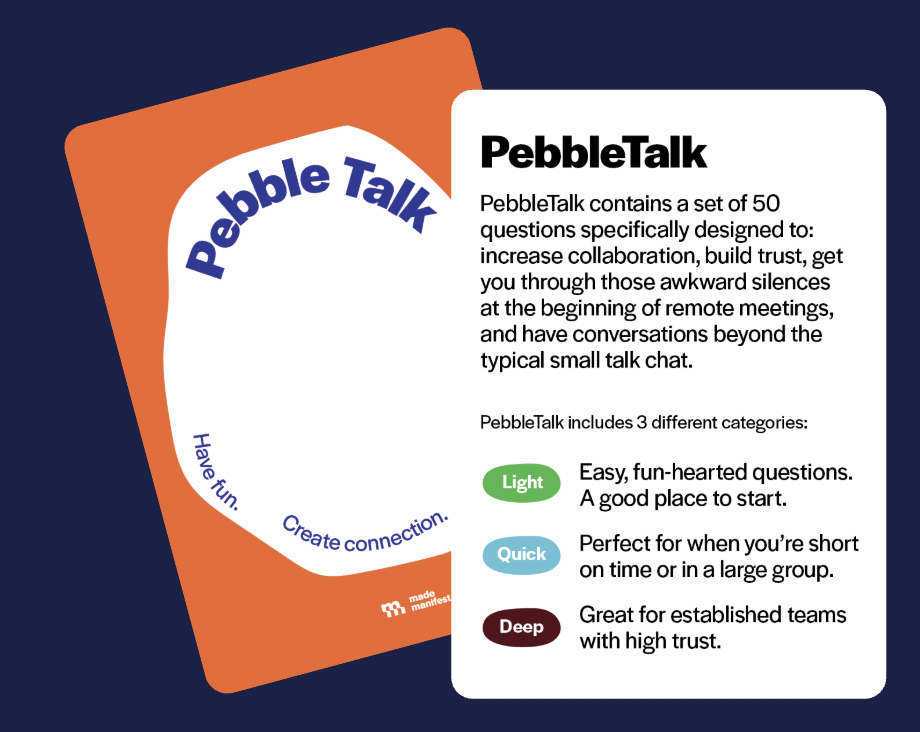
As a team, we oversaw the production process as well as the development of an online sales page. These two parts of the process were a bit of a learning curve as we had never produced a product for sale at this scale before. There were many learnings, including: ensuring quality control through proofs with a local printer and how to set a competitive market price for a set of cards while remaining profitable.
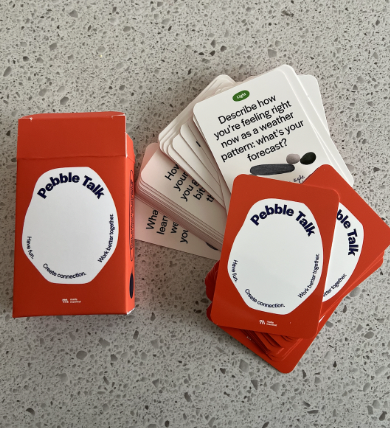
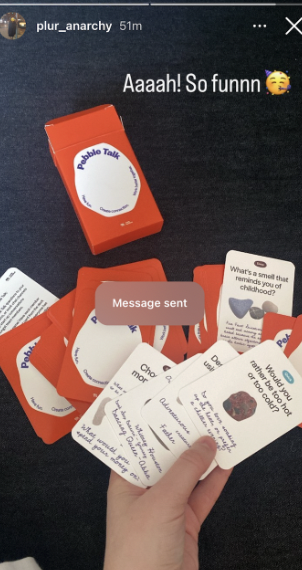
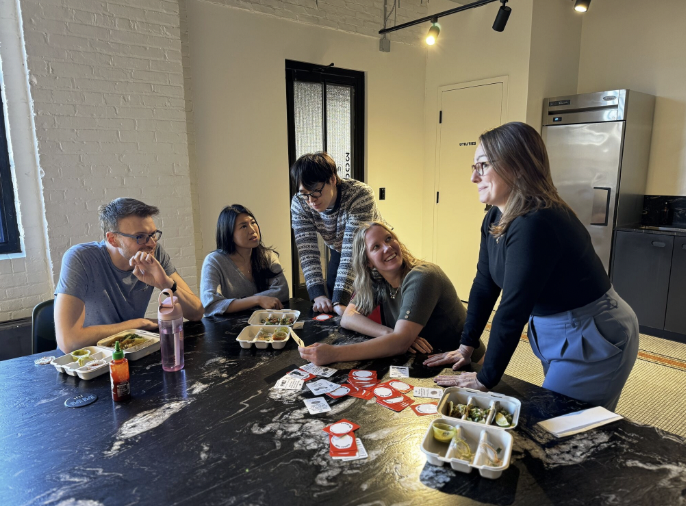
The first run of the cards was hugely successful— selling out within the first week of the launch. We also received so much great feedback from the people who purchased them, including:
“We've been having a great time incorporating Made Manifest’s pebble cards into our weekly game plan meetings. They're an awesome set of ice-breaker-style questions that help us incorporate a few minutes of fun conversation and team-building before we get down to business.”
“I used a Pebble Talk question to kick off the training I did last week for a small group of founders, and it worked so well!! This tool has been an invaluable resource to me!”
There is a plan to continue to produce the cards and utilize new marketing strategies to reach more audiences.